


Robot Mowers Invade America's Golf Courses, Putting Groundskeepers On Notice
From Four Seasons' Tranquilo Golf Club in Florida and Barton Hills Country Club in Michigan to Baltimore Country Club in Maryland and the Country Club of New Bedford in Massachusetts, robotic mowers are being spotted at golf courses nationwide. Their rapid adoption is reshaping course maintenance and raising fresh questions about future labor demand for the tens of thousands employed as groundskeepers.
There have been dozens of news stories this year about Roomba-esque machines roaming golf courses:
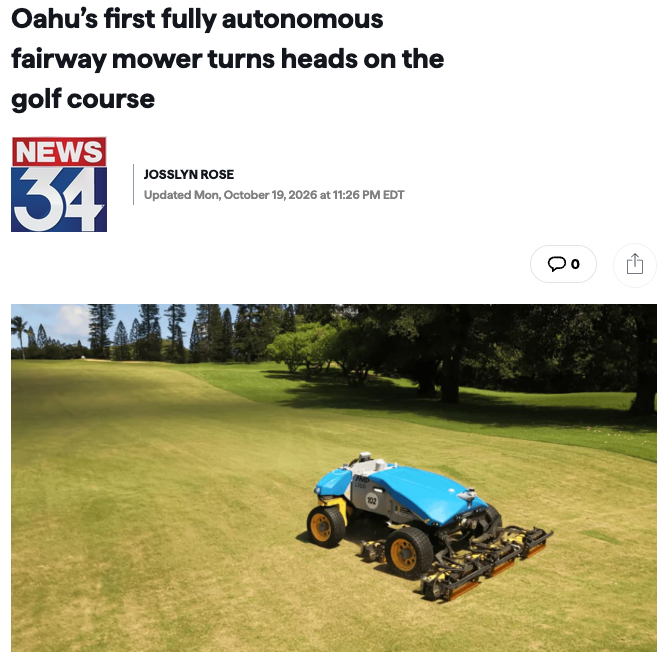
Oahu's first fully autonomous fairway mower turns heads on the golf course
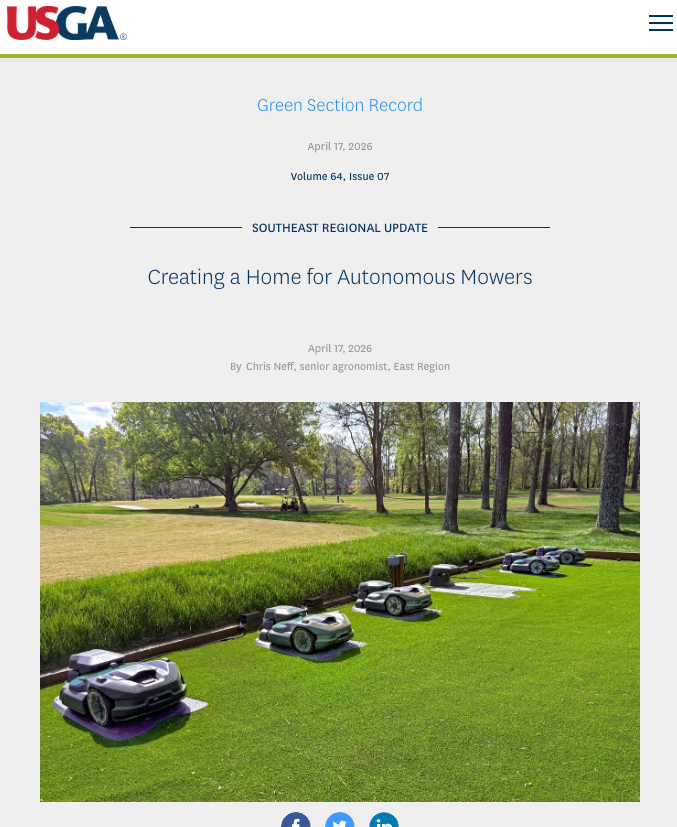
Creating a Home for Autonomous Mowers
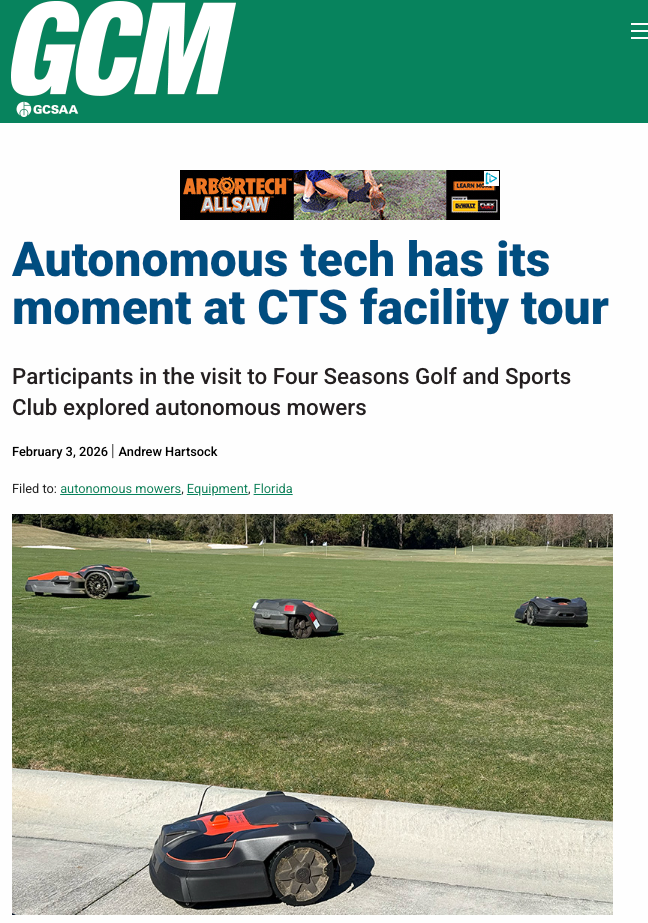
Autonomous tech has its moment at CTS facility tour
At the Country Club of New Bedford in North Dartmouth, Massachusetts, Assistant Superintendent Walter Garcia told industry publication Golfweek, "It's pretty much like a Roomba. You don't just let it go completely on its own. You set it up, give it its directions, and it maps out what it needs to do."
Garcia noted, "After that, it can move around and handle the work, but we're still there monitoring it and making sure everything runs properly."
Some of these autonomous electric mowers cost anywhere from several thousand dollars to nearly $200,000 each. The Country Club of New Bedford purchased two $200,000 units, ushering in physical AI. Traditionally, we think of humanoids, but here it takes the form of ground robots. These machines create more consistent playing conditions and drive down costs for the course.
Some courses have said that automated mowing has freed up groundskeepers to handle other tasks, such as repairing more ball marks on greens and trimming weeds. This has improved course maintenance.
The question becomes whether robots will eventually reduce the number of groundskeepers employed at golf courses. Tens of thousands work across the industry, and the current approach is to redirect those workers toward more delicate tasks.
Physical AI doesn't necessarily have to take the form of humanoids. It can also mean smarter machines that take humans out of the loop.