




The October Term: A Preview Of The Coming Cases For Another "Big Year" On The Court
Authored by Jonathan Turley via JonathanTurley.org,
October is when hype meets reality. In baseball, the final teams are sorted out for the playoffs, and your football teams are well into the winnowing-out process for the Super Bowl. For court nerds, the start of the October term at the Supreme Court can have a similar dynamic, as long-watched cases finally come up for oral argument. Although the court continues to accept cases on a rolling basis, this term is looking like another blockbuster, with cases that range from climate change to gun rights to parental rights.
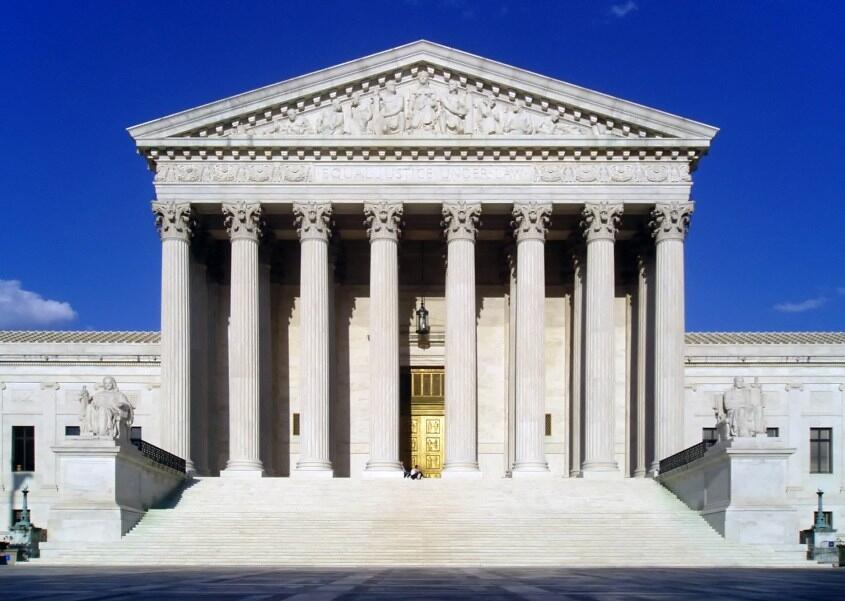
The odds of making the oral argument docket make the NFL season look like a walk in the park. After thousands of petitions, the Supreme Court accepts on average between 70-80 cases for the coveted "writ of certiorari." If you are a lower-court judge with an appealed case, this is one Super Bowl you would probably prefer to skip. The court generally reverses the cases it accepts for review. Last term, it had a 71 percent rejection rate, slightly up from the prior year.
This year already has a number of major cases that are likely to have transformative impacts on the law and society. Here are a few.
Climate Change
In Suncor Energy Inc. v. County Commissioners of Boulder County, Boulder sued energy companies under theories of public and private nuisance, trespass, unjust enrichment, and civil conspiracy, claiming that they knowingly contributed to climate change while misleading the public about its impacts." The Colorado Supreme Court ruled for the city and the county in finding that such lawsuits are not barred by federal preemption. If the case is allowed to go forward, it would expose companies to potentially thousands of climate change lawsuits.
Gun Rights
October is already shaping up as a major Second Amendment term. Democratic cities and states have been banning the AR-15, the most popular rifle in the U.S., and the 9mm semi-automatic handgun, the most popular handgun in the U.S. These cases out of the Seventh Circuit in Chicago (Viramontes v. Cook County) and the Second Circuit in New York (Grant v. Higgins) will likely give long-awaited clarity on these bans. They could potentially close off a major circumvention of prior rulings to achieve sweeping gun control policies.
In addition to these cases, the court is considering the possible review of Calce v. New York. In that case, the Second Circuit upheld a stun gun ban. The court previously sent back a similar case out of Massachusetts after the First Circuit ignored prior rulings. The court stressed that the fact that a weapon did not exist at the time of the ratification of the Second Amendment (such as "electric arms") does not mean that they fall outside of the constitutional protections. The addition of Calce would make this one of the most momentous Second Amendment terms in history.
Parochial Schools and Religious Discrimination
The court will return to another parochial school controversy this term. In prior cases, the court has repeatedly stepped in to prevent states from discriminating against religious schools in voucher or subsidy programs. In St. Mary Catholic Parish v. Roy, the Tenth Circuit upheld a Colorado provision that requires all preschools to agree not to discriminate on the "race, religious affiliation, sexual orientation, gender identity, income, or disability." The Catholic challengers are arguing that the policy requires them to violate their religious values as a condition for participating in the preschool program and funding.
Parental Rights
In International Partners for Ethical Care, Inc. v. Ferguson, Washington amended its laws to delay shelters in notifying parents of a runaway child who has "gender-affirming treatment" - the standard used for children in abusive homes. Instead, the Department of Children, Youth, and Families is first notified. The Ninth Circuit rejected parental claims raised in the case due to a lack of standing.
The Right to a 12-Member Jury
In Kian v. Florida, chiropractor Hamed Kian was convicted of five counts related to practicing with a suspended license. Pursuant to Florida law, he was tried by a six-person jury. Kian argues that the law violated his Sixth Amendment right to a jury of 12 members.
Some of us are watching a few other cases. Not surprisingly, my two favorites deal with the freedom of speech. The court has yet to decide whether to accept D.A. v. Tri-County Area Schools in which the Sixth Circuit upheld a school ban on high school students wearing "Let's Go Brandon" sweatshirts. In the view of many of us in the free-speech community, the case is a major potential First Amendment ruling in the making.
Some of us also hope that the court will take up Tiny Zaps v. Traxler, which deals with a ban on tattoos on the face, neck, or head as well as a ban on tattoo parlors within 1,000 feet of churches, school, or playgrounds. The South Carolina Supreme Court upheld the ban, and it could allow the court to reinforce free-speech protections for "body art."
The late Justice Ruth Bader Ginsburg once said, "It's hard not to have a big year at the Supreme Court." That is certainly true, but this term is already pretty big, and the court still has plenty of slots to fill before January.
Jonathan Turley is a law professor who teaches a class on the Constitution and the Supreme Court and is the best-selling author of "Rage and the Republic: The Unfinished Story of the American Revolution."