





Massive Fires Along Saudi Oil Export Pipeline, Regional Outlet Says
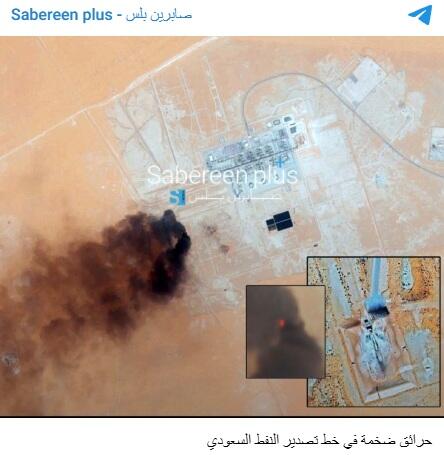
Update(1015ET): The news outlet of pro-Iranian factions in Iraq, Sabereen News, has cited new satellite imagery to report "massive fires in the Saudi oil export pipeline."
The outlet posted the following image on its official Telegram channel. Newsquawk, which picked up the Sabereen report, has noted that it remains unclear whether this is a new incident or is damage stemming from the earlier reported Sunday attack on Saudi Arabia's East-West pipeline (detailed below):
The same platform reviews:
- Saudi Arabia's East-West oil pipeline pumping reportedly halted after a new attack, AFP reports citing sources; "There was big damage and the pipeline stopped again"
- Saudi Arabia's East-West pipeline is flowing as normal, Bloomberg reports citing sources
- Modest upside seen in the energy benchmarks following this.
And more: Yemeni Houthis hit Saudi Arabia's Ras Tanura refinery (550k BPD) with missiles, Sabereen reports
Some other open source regional watchers have similarly observed:
Pumping Station No. 2 east of Riyadh appears to have been hit again. Oct 4 satellite imagery shows smoke stretching 50km from the site. Saudi Arabia's East-West pipeline was still recovering from September. @SoarAtlas https://t.co/s35nauXeBV
— Open Source Intel (@Osint613) October 5, 2026
Regional escalation moving fast:
BREAKING: Multiple reports indicate that Ansar Allah (Houthis) have launched missiles towards the Bab al-Mandeb. The Saudi/Yemen War is escalating VERY fast this morning following the commencement of the Saudi-backed Yemeni counteroffensive.
— Brett Erickson (@BrettErickson28) October 5, 2026
Some further (unconfirmed) footage emerging...
Footage shows a plume of smoke rising from Jeddah, following an Ansarallah ballistic missile attack on a Saudi ARAMCO refinery. Notably, for some time now, Saudi Arabia has stopped sending early warning alerts for missile and drone attacks from Yemen. https://t.co/2m87cCpYsc
— MoloMonitor 🇮🇹 (@MoloWarMonitor) October 5, 2026
* * *
"The East-West pipeline was attacked again yesterday," a source working in the kingdom’s energy sector told Agence France-Presse (AFP) on Monday. "A pumping station east of Riyadh in Khurais. It wasn’t targeted before. There was big damage and the pipeline stopped again."
However, follow-up reports were quick to note that the some 745-mile pipeline between Saudi Arabia's main oil fields in the east and the Yanbu terminal on the Red Sea are already back to operating normally and that flows are continuing.
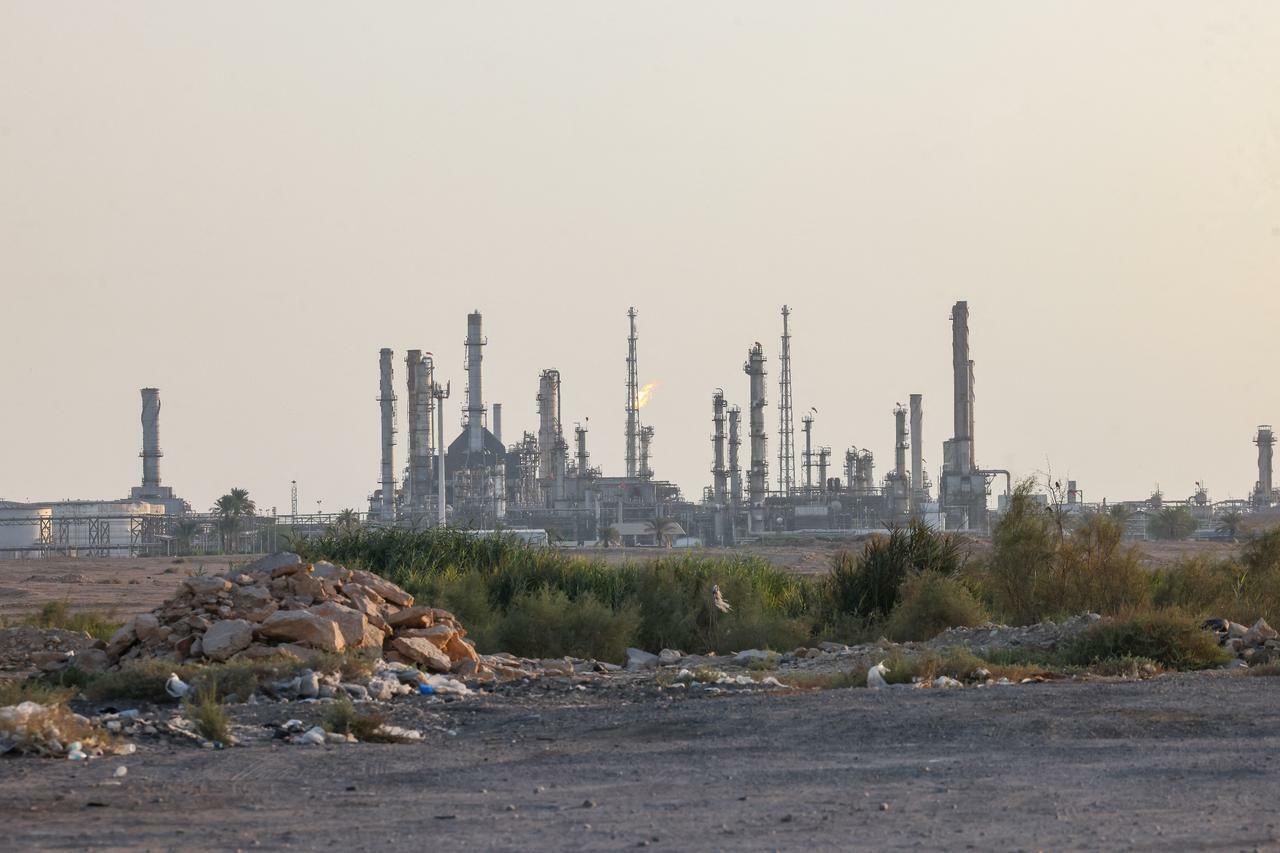
Bloomberg reports Monday, "Oil continues to flow through the East-West link, the people said, asking not to be identified discussing private information" - while confirming that the conduit was briefly halted over the weekend due to attack.
The East-West pipeline has been targeted several times after renewed Houthi-Saudi fighting over prior weeks, and such attacks could continue given that fighting has only intensified in neighboring Yemen.
The Saudi-backed government there over the weekend announced a "new phase in the battle to restore the state." Information Minister Moammar al-Eryani wrote on X that the Saudi-backed military operation aims to "extend authority … over every inch of Yemen’s land."
"The recovery of land, islands, and strategic positions in the Bab al-Mandeb Strait … directly contributes to safeguarding one of the world's most vital maritime passages and securing international trade and navigation, after the Houthi militia turned it into a tool for extortion and threats," he said of the anti-Houthi fight.
Flows through the east west pipeline have not been interrupted, despite some reports suggesting otherwise #OOTT #Aramco
— Amena Bakr (@Amena__Bakr) October 5, 2026
But amid optimistic pro-Riyadh headlines of counter-Houthi progress, the Ansar Allah movement is saying these reports are exagerrated.
Houthi official Hizam al-Assad has been cited in Nour News on Monday as saying that the Saudi coalition' mercenaries are fleeing and that headlines of "victory" do not capture the reality on the ground but something only being floated for inaccurate media reports. Per the regional report:
- Hizam al-Assad, a member of the political bureau of Yemen's Ansarullah, pointed out that Saudi Arabia's mercenaries continue to spread lies and stated: Their alleged "victories" do not go beyond the media and social networks.
- This member of the Ansarullah office emphasized: In the real field, Saudi Arabia's mercenaries are constantly fleeing; from "Ras al-Aara" on the coast of the Gulf of Aden to the "Al-Muwasit" area and the location of the traitor Al-Ulaymi in "Ta'iz".
Meanwhile the chief executive of the world’s biggest oil company, Saudi Aramco, offered some negative news on global crude supplies Monday.
He doesn't see the current situation as “normalizing” anytime soon, and so squeeze on crude oil and refined fuels is set to tighten.
🔴BREAKING: The squeeze on supplies of crude oil and refined fuels is set to worsen, and refilling global stockpiles tapped as an emergency measure might take two years, Saudi Aramco Chief Executive Amin Nasser tells the Energy Intelligence conference in London. https://t.co/Z0BcmFFHtU
— Al Arabiya English (@AlArabiya_Eng) October 5, 2026
"Until Hormuz fully re-opens and confidence returns, the crude reality is that pressure at both ends of the barrel will intensify. Even then, replenishing inventories while meeting demand could take up to two years," Amin Nasser told the Energy Intelligence Forum in London.
"The system is already straining," he said in what importantly marked his first in-person speech since the launch of the Iran war. According to more from the Aramco chief: "Brent crude prices would have reached up to $200 per barrel if Saudi Arabia's East-West pipeline did not exist," he said.