




Korea Picks A $22 Billion Texas Gas Plant As First Down Payment On Its $350 Billion Pledge To Trump
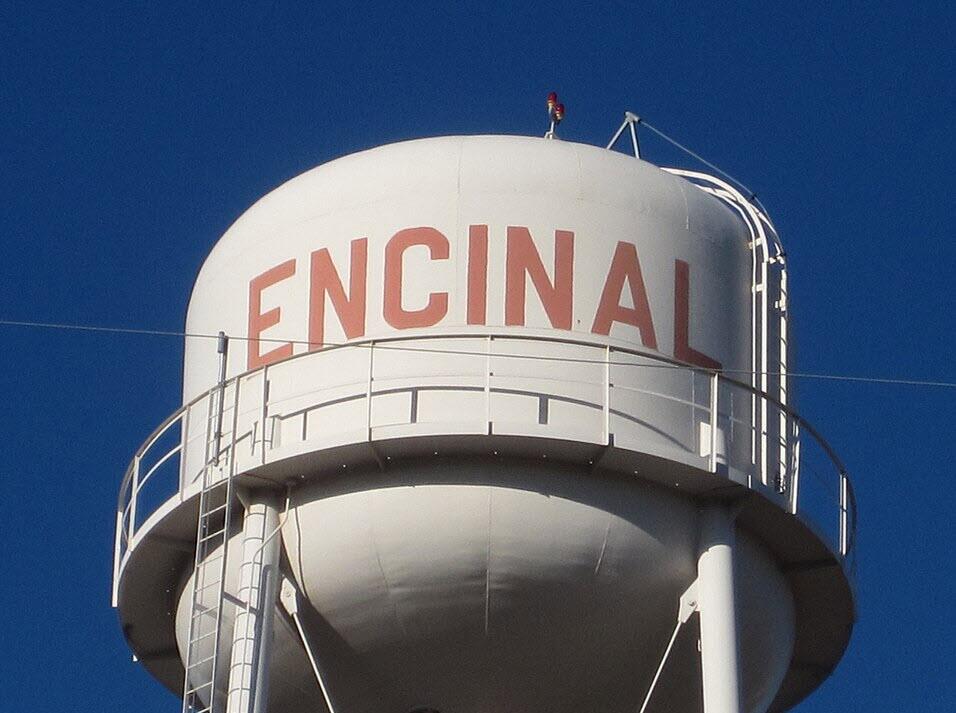
Ten months, one tariff threat and several "sleepless nights" later, South Korea has finally found somewhere to put the first piece of the $350 billion it promised to invest in America. The winner is a gas-fired power complex in Encinal, Texas (population 540, where real estate is about to ballistic), and it is built to feed the one thing Washington can never get enough of: electricity for data centers and chip fabs.
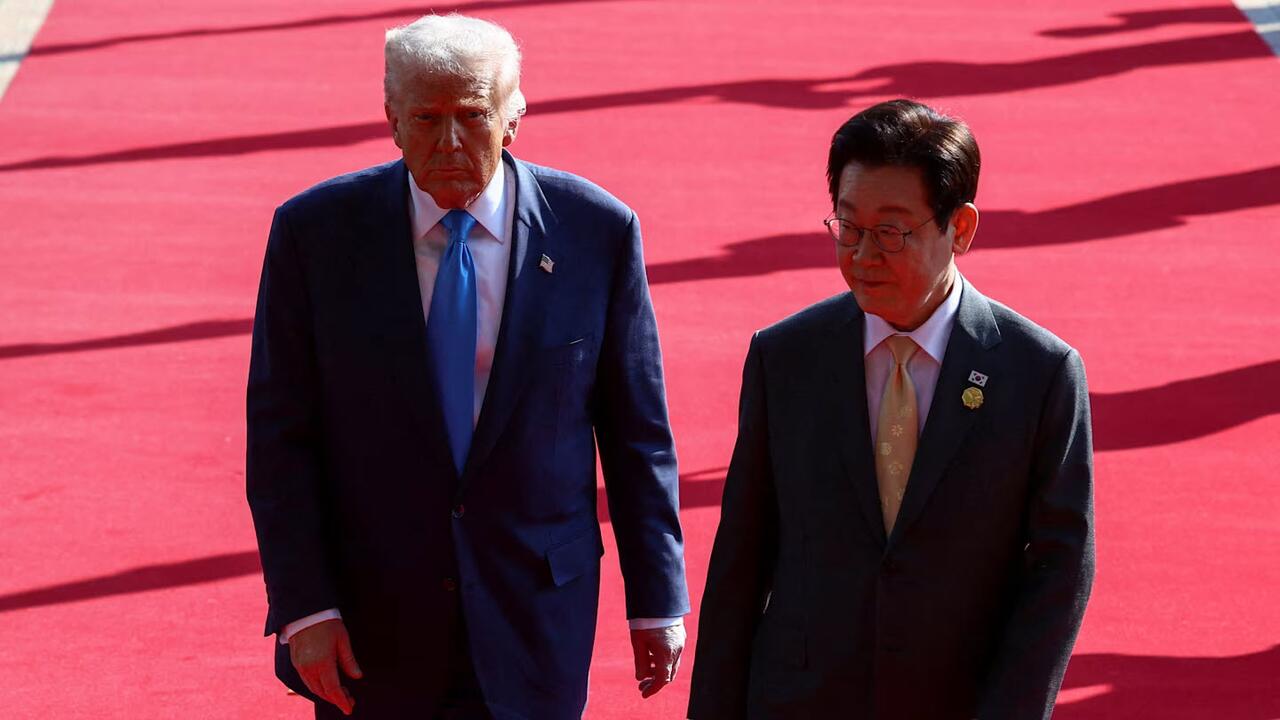
According to the FT, Seoul this week chose the proposed $22.3 billion, 6.3-gigawatt complex. The White House could announce it as soon as Wednesday, possibly with Trump announcing it himself, depending on how preparations for Xi Jinping's arrival in Washington go. Trump and President Lee Jae Myung met for 30 minutes on Tuesday on the sidelines of the UN General Assembly. The deal still needs final US approval.
Yonhap reported that the plant will be built in stages: an initial 1.4GW of simple-cycle gas turbines, followed by roughly 4.9GW of more efficient combined-cycle generation. However, in the first whiff of even more vaporware, no customers have been confirmed. Korea's KED Global adds that there is no power purchase agreement yet, with signing targeted for 2027. It also reports that the Trump administration asked for a roughly 25% increase in the project's size, which would take it to about $25 billion.
How the money works
Under the November 2025 agreement, Seoul supplies $200 billion in upfront capital for projects in "strategic industries," capped at $20 billion a year, plus a separate $150 billion for shipbuilding. Project cash flow is split 50/50 with Washington until Korea recovers its principal and interest. After that, Korea's share drops to 10% and the US takes 90%. It is a generous arrangement, just not for the side putting up the money.
Korean officials told the National Assembly that Encinal could generate $43 billion to $45 billion of revenue over 20 years, which they say is enough to recover principal and interest. Those numbers deserve a closer look:
- $43 billion to $45 billion works out to roughly $2.2 billion a year, or about twice the upfront capital. That is gross revenue. It comes before fuel, operations, maintenance and financing costs, and pretty much everything else... and gas is the main input cost of a gas plant.
- Korea receives only half of the project's cash flow until it is repaid. On a plain reading, recovering $22 billion plus interest from a 50% share would take distributable cash flow well above the capital invested. Seoul has not yet published a breakdown showing how revenue of about 2x capex achieves that.
- The official line is that every project must be "commercially reasonable." But as Haeyoon Kim of Korea Tech and Trade Watch told the FT, the US-led Investment Committee decides what counts as commercially reasonable, and Trump makes the final call. Seoul can object, but objecting risks higher tariffs.
Industry Minister Kim Jung-kwan said the government had "been negotiating intensely with the U.S. in order to pursue commercially viable projects," and that the goal was to expand Korean companies' entry into the US market. Lee said last week the talks had given him "sleepless nights."
Following Japan's lead
Tokyo went first. As we reported in February, the opening $36 billion tranche of Japan's $550 billion pledge was led by SB Energy's 9.2GW gas plant in Ohio (which as we reported last night is suddenly having major issues, having delayed its IPO), which Commerce Secretary Lutnick called "the largest natural gas generation facility in history." Japan has since added up to $40 billion of small modular reactors in Tennessee and Alabama.
If Seoul was looking for a template, it found one. The cost per unit of capacity is almost identical. At $22.3 billion for 6.3GW, Encinal comes to about $3,540 per kilowatt. At about $33 billion for 9.2GW, the Ohio plant comes to about $3,590 per kilowatt. Both are well above what US combined-cycle plants cost before the AI boom, which is what happens when every hyperscaler on earth wants the same megawatts at the same time.
The real constraint: turbines
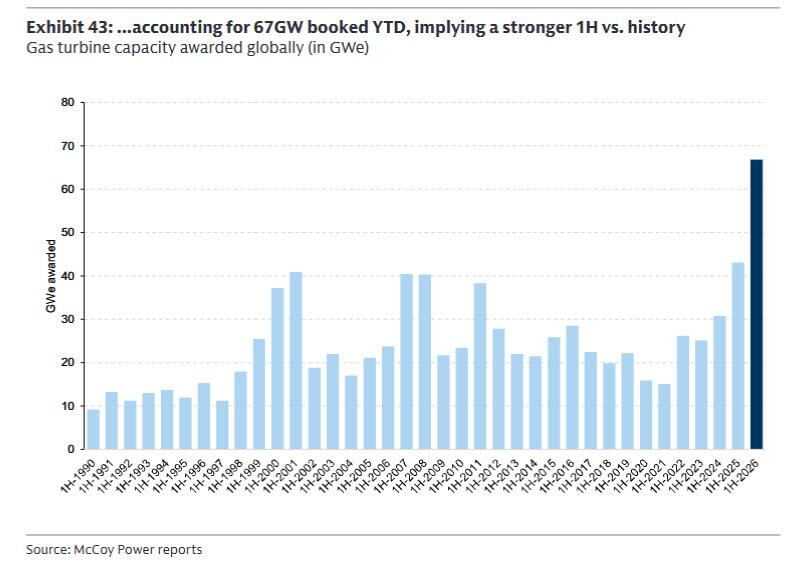
Money, it turns out, is the easy part. As we detailed earlier this month, large gas turbines are effectively sold out through 2030. Applied Digital's CEO warned that orders placed today may not arrive until 2032. Some developers are so desperate they are going back to 19th-century technology, boilers and steam, just to get power online sooner. Encinal's plan, 1.4GW of fast-to-deploy turbines first and then 4.9GW of combined-cycle capacity, means getting in line for the same heavy-duty equipment every hyperscaler is already chasing.
Goldman's latest research on the power problem (available to pro subscribers) published just hours before the FT story, shows why Washington wants these megawatts. In a Carbonomics note on Wednesday, Michele Della Vigna's team said that with power availability "emerging as a key constraint on AI infrastructure deployment" and grid connection times in the US and Europe expected to lengthen, they "raise our outlook for BTM [behind-the-meter] power generation from 40GW to 67GW by 2030."
Goldman now expects on-site gas generation to meet about 28% of US data center power demand by 2030. Its preferred beneficiaries of conventional gas generation are GE Vernova, Siemens Energy, Mitsubishi Heavy and INNIO. Not a Korean name among them, which leaves an awkward question for Seoul: how much of the equipment spending on a Korean-funded plant will actually end up with Korean suppliers.
The competition for that equipment is not only American. The same Goldman research flags that Alibaba Cloud is targeting 20GW of data-center power by 2032, which is more than three Encinals for one Chinese cloud provider alone.
Then there is the question of who ends up buying the electricity. The obvious candidates are the hyperscalers, and they are not short of cash to spend. Goldman credit strategist Amanda Lynam last week raised her forecast for hyperscaler investment-grade bond issuance to $420 billion in 2027, "more than a 60% increase vs our full-year 2026 estimate of $250 billion," with 65% to 75% expected to be placed in the dollar IG market.
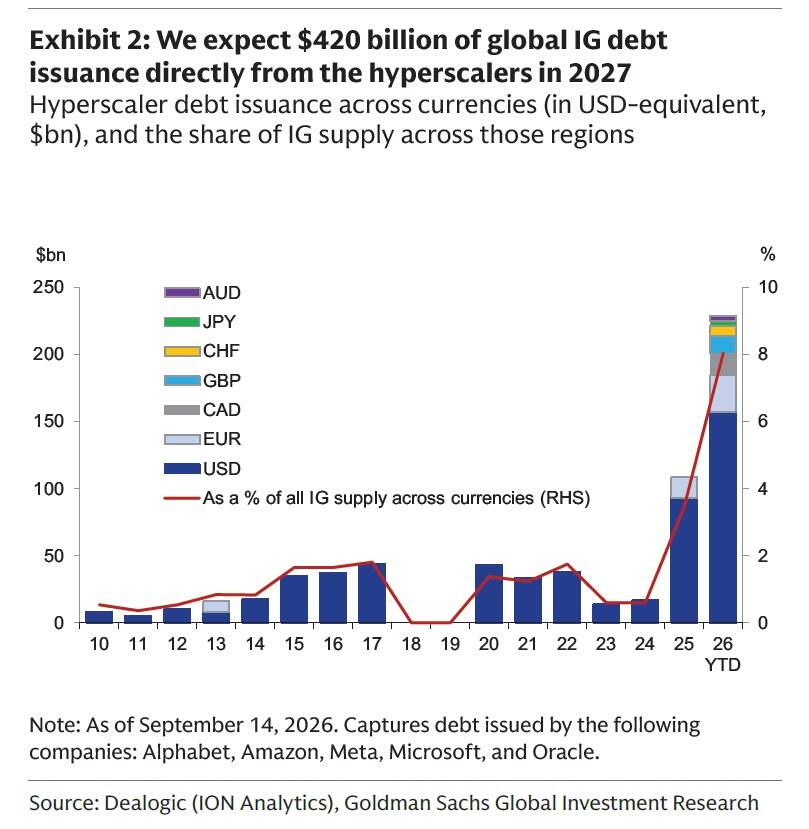
In other words, the would-be customers for Encinal's power are borrowing record sums to build data centers that need exactly this kind of plant. The bull case for Seoul is that one of them signs a PPA by 2027. The bear case is that Korea has fronted $22 billion on the assumption that someone will, while the AI capex cycle that Goldman's own economists say has companies "over-earning" is nearing its peak.
The bigger picture
The project comes as the US-Korea relationship is under strain on several fronts:
- Iran: Trump has pressed Seoul for help in the war against Iran, and Lee has ruled out sending forces in a combat role.
- Submarines: Seoul wants US help building nuclear-powered submarines. Washington agreed last year to cooperate on technical requirements and fuel, but there has been almost no progress since.
- Linkage: One Korean official told the FT that US counterparts had signaled further progress on the submarines would come only after Seoul announced some of its promised investments. Pay first, then we talk.
Nuclear projects and a scaled-down Alaska LNG project are expected to follow Encinal. Korea is also negotiating a stake of about 7% in Westinghouse, down from the 15% it originally sought, according to KED. For now, the first check is going to a Texas gas plant with no customers, no power purchase agreement, turbines that may not show up this decade, and revenue projections that still have to be squared with a 50/50 cash-flow split. That leaves $328 billion to go.