





Iran Allows Iraqi Ships To Use Strait Of Hormuz As Total Weekly Transits Reach Highest Since War Began
Over the past two weeks we have been chronicling the increased rate of crossing across the "blockaded" strait of Hormuz as a growing number of ships from friendly nations - whether untolled Chinese tankers or toll-paying Indian, Japanese and Korean vessels - have been making the passage. And as traffic through the Hormuz strait has been picking up in the past week, the seven-day rolling average for transits on Friday reached the highest since the war started, according to Bloomberg.
More vessels are crossing, including those with no clear links to Iran or China, as nations negotiate with Tehran to get their ships through. Transits over the past day were led by liquefied petroleum gas carriers, including one headed to India and others with Iranian affiliations.
Per Bloomberg calculations, a total of 13 ships have crossed since Friday morning, with 10 exiting the Persian Gulf and three entering from the open seas, according to vessel-tracking data compiled by Bloomberg. To be sure, that’s still a trickle compared with the numbers before the war began on Feb. 28: in normal times, about a fifth of the world’s oil and liquefied natural gas passes through the strait every day.

Recent crossings included a French container ship and a Japanese-owned LNG tanker, seemingly the first such transits since the war began. It’s not clear whether those journeys were a result of diplomatic outreach or negotiations by shipping companies and their intermediaries.
Outbound traffic included five bulk carriers and one oil-product tanker joined the four LPG tankers in exiting the Persian Gulf since Friday morning. Three of the bulkers and the fuel tanker sailed on Saturday morning. Apart from the Indian LPG vessel, the others are linked to Chinese or Iranian interests.

On the inbound side, two LPG carriers and one fuel tanker with Iranian affiliations were among the inbound transits recorded since Friday morning.

But while traffic is slowly but surely rising, a potential gamechanger for energy flows and oli supplies through Hormuz was unveiled today when the Iranian military said major oil producer Iraq is exempt from shipping restrictions in the Strait of Hormuz.
“Brotherly Iraq is exempt from any restrictions we have imposed on the Strait of Hormuz,” Iran’s military spokesman said in an Arabic-language video statement published by state-run Islamic Republic News Agency.
The restrictions are imposed only on “enemy countries,” said Ebrahim Zolfaghari, a spokesman for Iran’s Khatam al-Anbiya Central Headquarters. Iran’s control of the strait has become its biggest leverage in the conflict.
The declaration has the potential to unleash as much as 3 million barrels a day of Iraqi oil cargoes. An Iraqi official, however, cautioned that the usefulness of the exemption will depend on whether shipping companies are willing to risk entering the strait to collect cargoes.
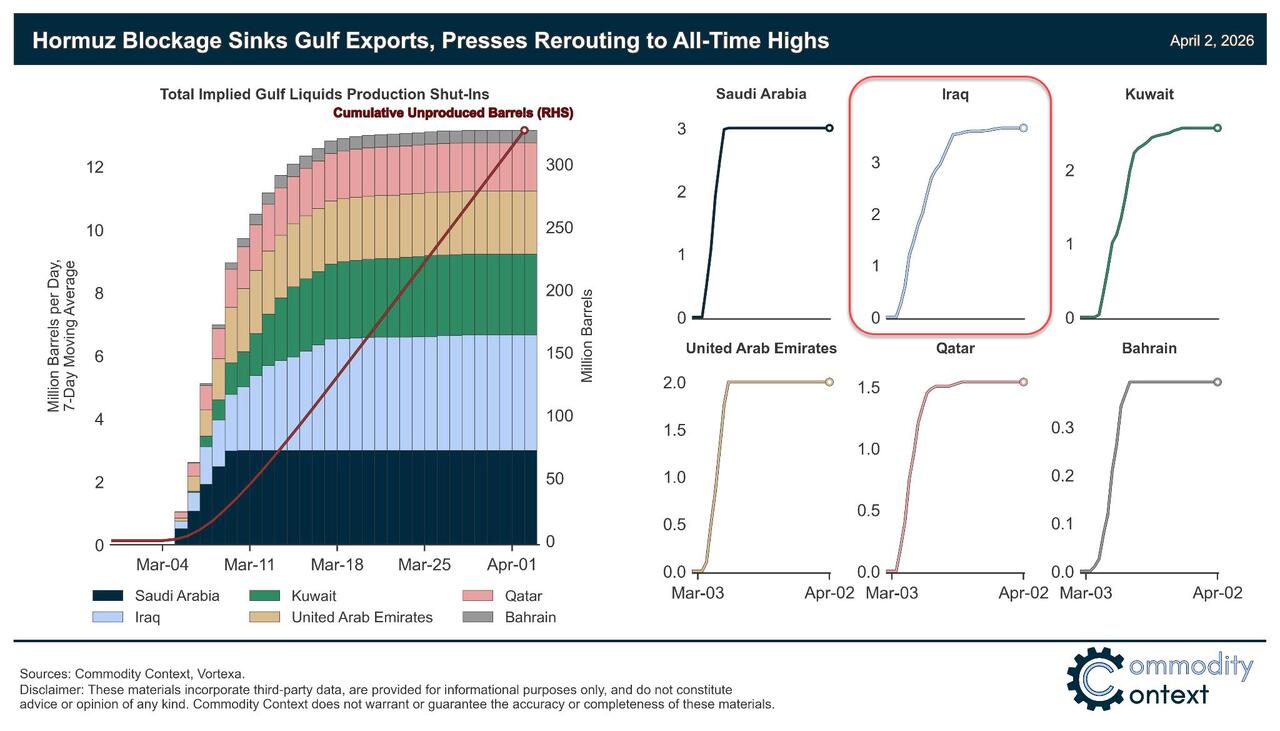
It’s not immediately clear if the exemption will apply to all Iraqi oil or just the nation’s tankers, or indeed how it will be enforced.
Separately, officials in Iran’s Khuzestan province said the Shalamcheh international border crossing with Iraq has reopened after a brief closure. Lofteh Derokvandi, deputy governor of Khuzestan and special governor of Khorramshahr, told Iran’s state news agency IRNA that crossings had resumed for pilgrims and traders, with commercial activity continuing without disruption.