





USDA, US Army Break Ground On Texas Facility To Combat Flesh-Eating Parasite Spread
Authored by Naveen Athrappully via The Epoch Times (emphasis ours),
U.S. officials broke ground for a New World Screwworm (NWS) sterile fly production facility in Texas to combat the flesh-eating parasites, which have spread across Mexico and pose a significant threat to America’s livestock, wildlife, and public health.

Located in Moore Air Base, Edinburg, the facility “is being built with an aggressive timeline designed to quickly expand the nation’s sterile fly production capacity,” the U.S. Department of Agriculture (USDA) said in an April 17 statement.
Initial operations are set to start from November 2027, hitting production of 100 million sterile flies per week. “Construction continues immediately beyond initial operations to scale full production capacity to 300 million sterile flies per week,” the department added.
NWS female flies lay eggs on orifices or wounds of warm-blooded animals, which later hatch into larvae. The larva burrows deep into wounds, feeding on the host’s flesh.
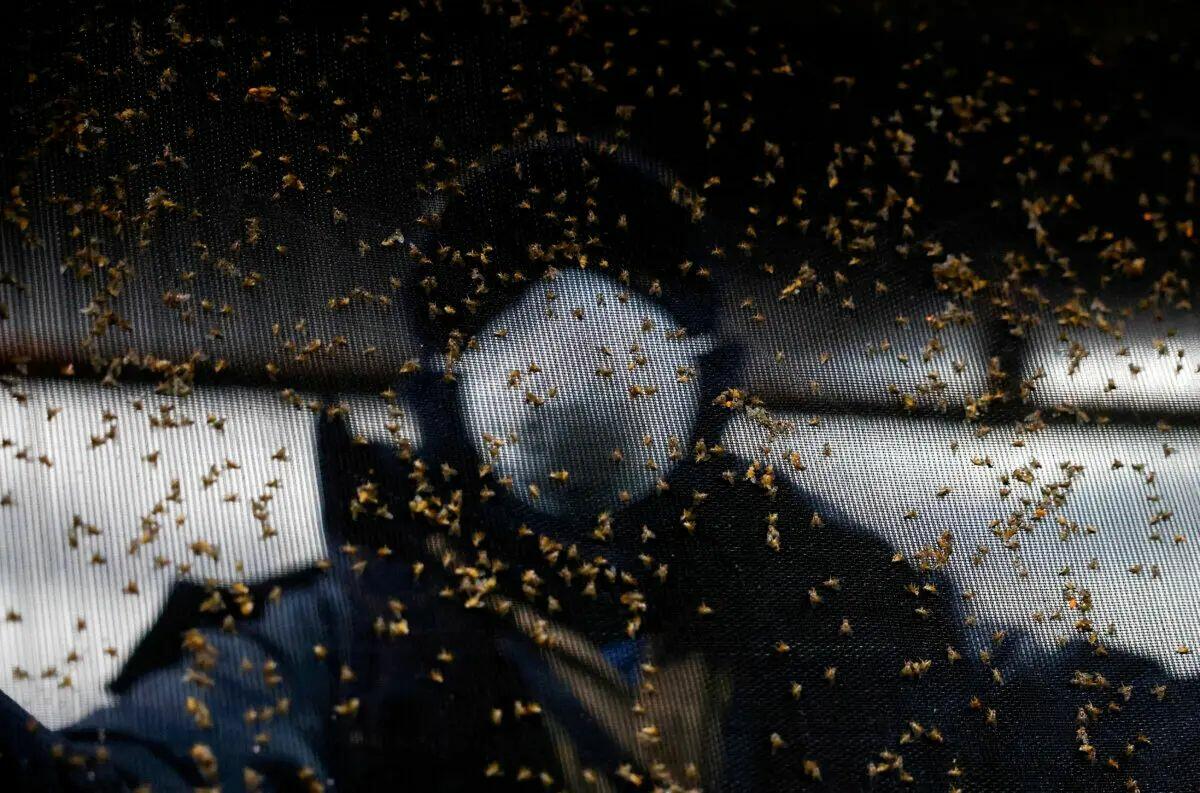
The wound grows larger as more eggs are hatched and more larvae feed into the flesh, with the animal eventually dying. A single female fly can lay up to 3,000 eggs in its lifetime. Large swarms of the parasites coming in from Mexico pose a significant threat to America’s livestock industry.
Currently, the closest active cases to the U.S.-Mexico border have been reported in the Mexican state of Nuevo Leon, located less than 70 miles from the border.
Swarms of NWS flies can be countered by releasing sterile male flies into the group. When male flies mate with females, they end up laying unfertilized eggs. Over time, the swarm diminishes, warding off the threat.
In its recent statement, USDA said it already produces sterile flies at a facility in Panama that outputs 100 million insects per week. Moreover, the agency has invested $21 million into a Mexican facility, which is set to become operational this summer.
The Moore Air Base facility, with its maximum output of 300 million sterile flies per week, boosts America’s efforts to counter the NWS threat.
The groundbreaking ceremony was led by Secretary of Agriculture Brooke L. Rollins, and commanding general of the U.S. Army Corps of Engineers (USACE) Lieutenant General William H. “Butch” Graham. USDA and USACE have cut red tape, secured expedited procurement, and eliminated other barriers to get the facility built.
“Breaking ground on this facility marks a major investment in safeguarding America’s livestock and the producers who feed this nation. This puts NWS sterile fly production in American hands, so we do not have to rely on other countries for the best offensive measure to push screwworm away from our borders,” Rollins said.
“The New World Screwworm threatens the health of our herds, the stability of rural economies, and the resilience of our supply chain. President Trump and his entire cabinet is committed to leveraging every resource necessary to contain this pest, protect American agriculture, and ensure the long-term security of our food supply chain.”
As of April 2, the United States has imposed restrictions on the import of live animals—cattle, horses, and bison—from Mexico due to NWS parasites.
In addition to animals, NWS is also known to infect humans in rare cases.
According to an April 14 report from the Centers for Disease Control and Prevention, multiple such cases have been reported from outside the United States.
“In 2023, Panama and Costa Rica identified an outbreak of NWS. Since that time, all countries in Central America and Mexico, where NWS was previously controlled, have identified cases in animals and people,” CDC said.
“As of April 14, 2026, these countries have reported nearly 168,000 NWS cases in animals and more than 1,700 cases in people.”
As for the United States, one confirmed NWS infection was found in a person who returned to the country from El Salvador.
New World Screwworm infection in humans is generally non-fatal if discovered early and treated.
However, if not caught early and treated, infestations can lead to extensive tissue damage and long-lasting severe pain in the case of nerve damage. Moreover, if the larvae burrow into vital organs, it can result in complications.
Symptoms in humans include pain, wound bleeding, foul-smelling odor around the infected site, and lack of natural healing, with the individual prone to sense the movement of larvae in the wounded area.
The CDC clarified that NWS flies have not been detected in the United States and that there is “no immediate risk of infestation to people.”